
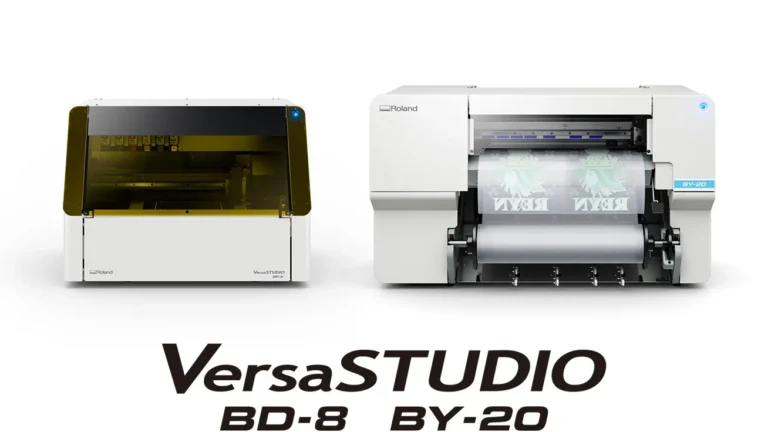
Roland just put its name behind UV DTF, and that’s a more useful signal than the machine itself. Roland DGA Corporation has introduced a UV DTF (Direct-to-Film) Transfer System, and if you’ve been half-watching the rise of UV printing and laser engraving in the maker space, the interesting part isn’t the product spec sheet — it’s who’s making it.
What UV DTF Actually Is
UV DTF prints a UV-cured graphic onto a transfer film, laminates it, and lets you apply it to a hard good by peeling and pressing — no heat press, no weeding, and no need to print directly on the object itself. That last part is the whole point. A traditional UV flatbed prints straight onto the item, which works fine for flat surfaces but gets complicated fast on anything curved or oddly shaped without custom jigs. UV DTF sidesteps that: you print the graphic once, on film, and apply it to tumblers, glassware, acrylic, wood, leather, or coated metal afterward. Print once, apply anywhere.
Why a Company Like Roland Entering This Matters
Roland has been a serious player in large-format print and UV technology for decades, and their machines are typically built for professional environments — sign shops, print providers, production facilities — not casual hobby setups. UV DTF has mostly lived with Chinese OEM manufacturers and smaller import brands up to this point. When a company with Roland’s reputation and dealer network moves in, it’s a decent signal that the category has matured past the early-adopter phase and into something commercial shops are expected to take seriously.
Roland’s system centers on an integrated print-laminate-cure workflow with CMYK plus white and gloss channels. The white layer lets you print opaque graphics on dark or clear substrates, and the gloss channel can create raised texture and spot-gloss highlights — dimensional branding without engraving. The engineering emphasis, consistent with Roland’s other equipment, is on reliable ink delivery and stable curing for consistent production runs, which is the boring but important stuff that actually determines whether a machine makes you money.
Where This Fits — and Where It Doesn’t
Let’s be honest about who this is for. This is not a garage side-hustle entry machine. Roland-tier commercial equipment comes with commercial pricing and commercial expectations attached. It makes the most sense for established print shops, growing customization brands with real volume, promotional product distributors, or sign businesses looking to add a product line — particularly anyone servicing corporate or B2B clients, where being able to say your system is Roland-based actually carries weight with a buyer.
If you’re a smaller shop still testing whether UV printing belongs in your product mix at all, this isn’t where I’d start. A lower-cost desktop UV printer or an outsourced short run is the more sensible way to validate demand before committing to equipment at this price point. UV DTF’s real advantage — separating printing from application, so you can batch-print transfers in a controlled environment and apply them on demand — only pays off once you have the order volume to justify it.
Questions Worth Asking Before You Look Into This
Before spending time researching UV DTF equipment — Roland’s or anyone else’s — it’s worth being honest about whether you actually need high-volume transfer production, whether you’re serving clients who care what brand is behind your equipment, whether separating printing from application solves a real bottleneck in your current workflow, and whether you have the space and process discipline to manage film inventory. None of that is exciting to think through, but it’s the part that determines whether the machine pays for itself.
Whether or not you ever buy a Roland system, the fact that they’re building for UV DTF is one more data point that the workflow isn’t a fad. Laser engraving and UV printing aren’t competitors — depth and permanence from the laser, color and flexibility from UV — and shops that eventually run both tend to have the broadest product range. If you’re earlier in that decision, my beginner’s guide to laser machines is a reasonable place to start before you’re shopping for transfer systems at all.
[…] 👉 Roland UV DTF Transfer System Reviewhttps://laticy.com/roland-uv-dtf-transfer-system/ […]
[…] is getting more attention from small shops, desktop manufacturers, and customization brands. The Roland UV DTF transfer system was a clear signal that UV DTF isn’t just a fringe craft trend. At the same time, desktop and […]