Table of Contents
- Introduction
- The Business Case for Choosing an Ecosystem
- xTool’s Machine Lineup and Business Applications
- Diode Lasers
- CO₂ Lasers
- Fiber Lasers
- Combo Machines (Fiber + Diode, Laser + Blade + Printing)
- Textile & Apparel Printing
- Beyond the Machines: The Complete Ecosystem
- Software Solutions
- Safety & Workspace Support
- Accessories to Expand Capabilities
- Training & Community
- Scaling with xTool: A Business Growth Pathway
- Why Small Footprint Machines Matter for New Businesses
- Long-Term Value of Compact Machines
- Comparing to Other Approaches
- Business Considerations Beyond Equipment
- A Balanced Perspective
- Final Thoughts
- Frequently Asked Questions
The Business Case for Choosing an Ecosystem
When most people think about starting in digital fabrication, they focus on the machine itself. How much power does it have? What materials can it cut? How much does it cost?
These are important questions, but they don’t tell the full story. Running a business requires more than just a machine—it requires a system that keeps you efficient and consistent.
That’s why choosing a brand that offers a complete ecosystem matters. An ecosystem means:
- Fewer compatibility issues: Hardware, software, and accessories are designed to work together.
- Smoother learning curve: Upgrading machines doesn’t require relearning everything from scratch.
- Long-term growth: As your business expands, your equipment can expand with you.
For entrepreneurs, this translates to time saved, fewer mistakes, and easier scaling. Instead of piecing together a workshop from multiple brands and constantly troubleshooting, you can focus on what matters most: creating products and building your customer base.
xTool has leaned into this philosophy by building a range of machines and accessories that form a seamless workflow. It’s this “all-in-one” approach that makes them appealing to both beginners and growing businesses.
xTool’s Machine Lineup and Business Applications
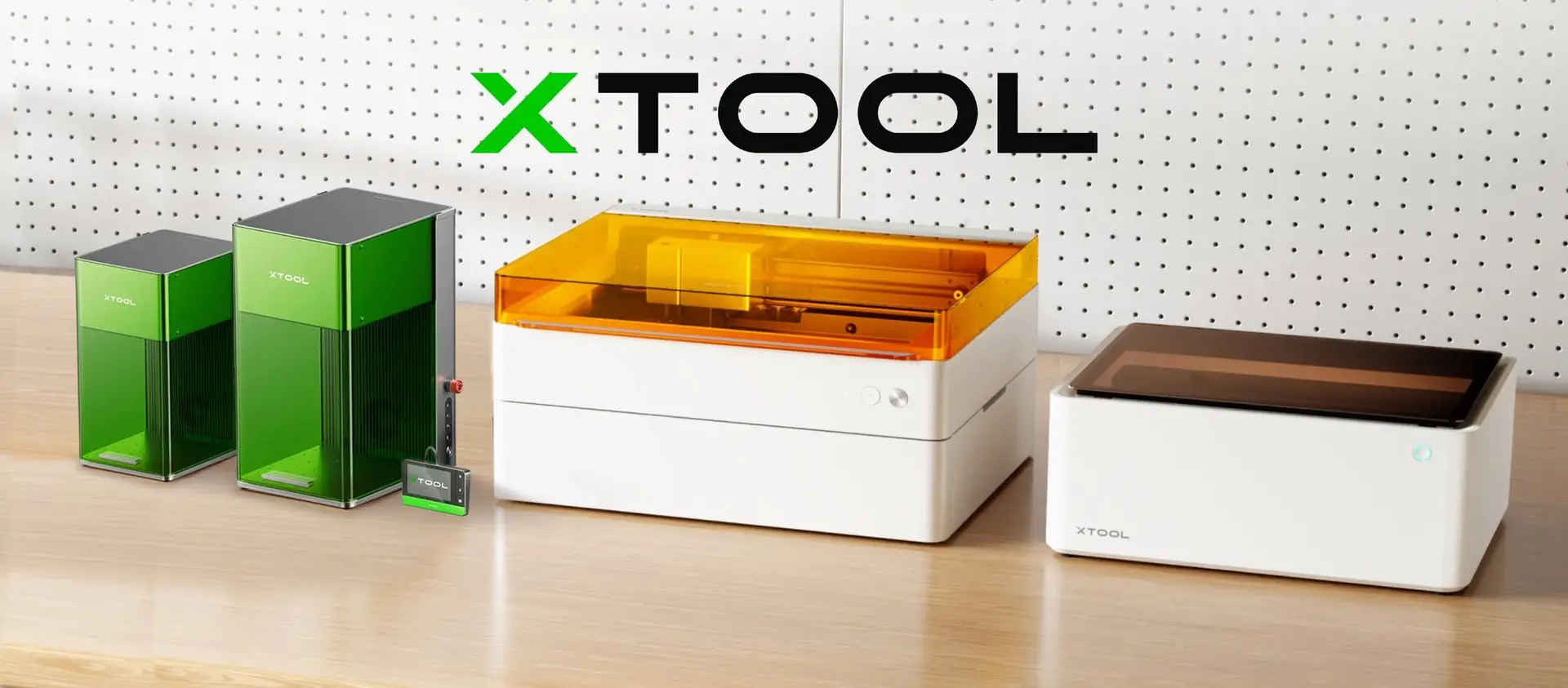
One of xTool’s biggest strengths is the sheer variety of machines it offers. This makes it possible for entrepreneurs to enter at almost any price point and grow into more advanced capabilities over time.
Let’s break down their key product families and how each fits into a business journey.
Diode Lasers: Affordable Entry Points
For beginners, diode lasers like the xTool S1 or M1 Ultra are excellent starting points. They’re affordable, compact, and capable of engraving and light cutting on wood, leather, acrylic, paper, and certain plastics.
Business Applications:
- Personalized gifts (photo frames, coasters, ornaments)
- Small décor items (signs, keychains, wall art)
- Entry-level e-commerce shops on platforms like Etsy
Who It’s For:
- Hobbyists testing if they can monetize their creativity
- Entrepreneurs starting small with limited space and budget
- Educators introducing students to digital fabrication
While diode lasers don’t cut as deeply or as quickly as CO₂ models, they’re often enough to validate product ideas before investing in higher-end equipment.
CO₂ Lasers: Power and Production
As businesses grow, speed and material flexibility become critical. That’s where xTool’s CO₂ lasers, like the P2S and flagship P3, come in.
Business Applications:
- Cutting thicker wood and acrylic for signage and furniture accents
- Batch production of products (e.g., 50 custom coasters in one run)
- Engraving leather products like wallets or handbags
- Mid-to-large-scale e-commerce shops
Who It’s For:
- Entrepreneurs scaling from side hustle to full-time income
- Makers who need faster production times
- Businesses that require consistent performance for larger orders
CO₂ lasers are often the backbone of fabrication businesses because they offer a balance of power, versatility, and speed. But they do come with a drawback: many weigh over 550 lbs and require significant space and ventilation. For new entrepreneurs, that can be a major barrier to entry.
This is where xTool’s other machines—particularly their combo units and compact models—become so important.
Fiber Lasers: Specializing in Metals
If your business involves working with metals, a fiber laser is essential. xTool’s F1 Ultra and F2 Ultra are built for precision engraving and marking metals like stainless steel, aluminum, titanium, and even gold.
Business Applications:
- Jewelry engraving (rings, bracelets, pendants)
- Industrial tags and serial number plates
- Custom branding on tools, knives, or tumblers
Who It’s For:
- Specialized small businesses serving high-value niches
- Jewelers and luxury product makers
- Makers looking to diversify into premium markets
What makes xTool’s lineup stand out is that they also offer combo fiber + diode machines—letting entrepreneurs cover both wood/acrylic and metal engraving in one device.
Combo Machines: Maximizing Space and Versatility
For many new entrepreneurs, space is as important as cost. Not everyone has a dedicated workshop or the ability to install a 550-pound CO₂ laser. Many are working out of spare bedrooms, apartments, or shared spaces.
This is where xTool’s combo machines really shine. They’re designed to deliver multiple capabilities in a single, compact footprint.
- xTool F1 Ultra: Combines fiber and diode laser technology in one desktop unit. That means you can engrave wood, acrylic, and leather and move seamlessly into metal engraving without needing two separate machines. For a small business, this versatility opens multiple product lines without doubling equipment costs or space needs.
- xTool M1 Ultra: Known as one of the first hybrid machines of its kind, it pairs a diode laser with a blade cutter and printing module. This allows not only engraving and cutting, but also fabric cutting, vinyl decal production, and even direct-to-object printing—all from one compact unit.
For entrepreneurs, this versatility means fewer upfront purchases and a smaller footprint—two critical advantages when you’re just starting out.
Textile & Apparel Printing: Expanding Beyond Hard Materials
One of xTool’s newer offerings is its apparel printer, which allows customization on fabrics. This expands opportunities into the booming market of custom clothing and accessories.
Business Applications:
- Custom t-shirts and hoodies
- Promotional merchandise for businesses
- Tote bags and uniforms for organizations
Who It’s For:
- Entrepreneurs looking to diversify product lines
- Makers who want to cross-sell apparel alongside engraved products
- Small shops entering the apparel customization space
By adding textiles into the mix, xTool broadens what’s possible within its ecosystem, allowing businesses to serve multiple customer bases without leaving the brand.
Beyond the Machines: The Complete Ecosystem
Machines are only one part of the equation. What sets xTool apart is its commitment to providing a complete support system around them.
Software Solutions
xTool Studio makes design-to-production simple, even for beginners. Paired with Atomm, a design platform that offers thousands of ready-to-use files, entrepreneurs can start creating immediately without having to learn advanced design skills on day one.
Safety & Workspace Support
Digital fabrication isn’t just about creativity—it’s also about safety and efficiency. xTool provides air purifiers, fire safety kits, and other tools designed to keep your workspace secure.
Accessories to Expand Capabilities
Rotary tools for cylindrical engraving, conveyor feeders for batch jobs, and riser bases for larger materials are just a few of the accessories that can turn a basic setup into a more advanced production line.
Training & Community
xTool invests heavily in tutorials, demo rooms, and a strong online community. For entrepreneurs, this support is invaluable. Instead of spending hours troubleshooting, you can often find solutions quickly, keeping production moving.
Scaling with xTool: A Business Growth Pathway
One of the biggest business benefits of the xTool ecosystem is the ability to scale in stages.
Here’s an example pathway:
- Start Small: Launch with an M1 Ultra diode + blade cutter combo, testing personalized products on Etsy.
- Expand Production: Upgrade to a P3 CO₂ laser for faster production and more material options.
- Diversify Niches: Add a fiber + diode combo machine like the F1 Ultra for premium metal engraving and wood products.
- Branch Out: Incorporate an apparel printer to tap into the clothing market.
At every stage, you’re building on top of what you already know. The ecosystem ensures you’re not constantly relearning software or troubleshooting compatibility issues. This keeps your momentum strong and your focus on business growth.
Why Small Footprint Machines Matter for New Businesses
A large CO₂ laser can weigh 550 lbs or more and require dedicated ventilation and floor space. For many startups, that’s simply not realistic.
xTool’s machines are designed with desktop use in mind:
- Most can be set up on a sturdy table in a small room.
- Many have integrated safety enclosures, meaning you don’t need to build custom housings.
- Portable models like the xTool F1 can even be moved around as needed, making them practical for small workspaces.
This smaller footprint makes it possible for new entrepreneurs to start from home without heavy infrastructure investment. As the business grows, scaling into larger CO₂ units becomes an option rather than a requirement.
Long-Term Value of Compact Machines
A common question for entrepreneurs is: “What happens if I eventually upgrade to a bigger CO₂ laser?” It’s a fair concern—nobody wants to invest in equipment that becomes obsolete after a few years.
The good news is that xTool’s compact and combo machines don’t lose their usefulness when you scale up. In fact, they can become even more valuable:
- On-Site Customization: Portable machines like the F1 Ultra can be taken on the road for craft fairs, pop-up shops, or live personalization events. Engraving a tumbler or keychain on-site adds instant value and helps attract new customers.
- Parallel Workflows: Even when you own a larger CO₂ laser, having a smaller diode or fiber+diode combo machine means you can run two jobs at once. While one machine cuts thicker material, the other can handle engraving or smaller runs, boosting productivity.
- Specialized Use: Smaller machines are perfect for quick personalization jobs or working with delicate materials where a massive industrial laser may be overkill.
From a business strategy perspective, this means your first xTool machine remains an asset, not a sunk cost. Instead of gathering dust, it can play a supporting role as your business scales.
Comparing to Other Approaches
Of course, xTool isn’t the only player in the digital fabrication space. Some entrepreneurs prefer piecing together machines from multiple brands to get exactly what they want.
That approach can work, but it also brings challenges:
- Different software systems to learn and manage
- Compatibility issues with accessories
- More time spent troubleshooting instead of creating
By contrast, xTool’s appeal is its simplicity and consistency. You trade a bit of flexibility for a smoother, more predictable workflow. For most small businesses, that’s a worthwhile trade-off.
Business Considerations Beyond Equipment
Choosing the right equipment is important—but it’s only one piece of the puzzle. To succeed in digital fabrication, you also need to think about:
- Pricing your products correctly (check out my Product Pricing Tool).
- Structuring your business legally (LLC, EIN, licenses).
- Marketing and finding customers through social media, marketplaces, and your own website.
That’s why I recommend reading my full resource: The Ultimate Guide to Starting and Growing a Digital Manufacturing Business. It covers all the areas that go beyond machines and will help you build a strong foundation for long-term success.
A Balanced Perspective
No single brand is right for everyone. xTool is best suited for:
- Beginners who want an easy entry point
- Small businesses that value scaling without complexity
- Makers who want to diversify product lines under one ecosystem
- Entrepreneurs working in small spaces who can’t accommodate massive CO₂ machines
- Business owners who want compact machines that remain valuable even after upgrading
On the other hand, industrial manufacturers or open-source enthusiasts may prefer alternatives that offer higher customization or industrial-grade performance.
The key is to match your business goals with the right tools—and for many small businesses, xTool provides that balance of affordability, scalability, and support.
Final Thoughts
Digital fabrication is one of the most exciting areas for new entrepreneurs today. Whether you’re starting as a side hustle or aiming to build a full-time business, the tools you choose can make or break your success.
By offering a wide range of machines—diode, CO₂, fiber, combo units, and textile printers—along with software, accessories, and safety solutions, xTool delivers a complete ecosystem that supports growth at every stage.
And importantly, even if you do scale into larger, heavier machines, your original xTool investment doesn’t become obsolete. It can continue to serve as a portable, specialized, or parallel-production tool—maximizing its value over the long term.
If you’re considering starting your own business, remember that equipment is only part of the equation. Planning, pricing, and marketing are just as important. That’s why I suggest pairing your equipment research with my guide: The Ultimate Guide to Starting and Growing a Digital Manufacturing Business.
Together, these resources can give you the confidence and tools you need to build a successful venture in digital fabrication.
Check out: xTool’s lineup
Frequently Asked Questions
Is xTool good for beginners?
Yes. Compact and affordable models like the M1 Ultra or S1 are designed for affordability and ease of use, making them perfect for testing business ideas without a huge upfront investment.
Can you make money with an xTool machine?
Absolutely. Many entrepreneurs run profitable Etsy shops and small businesses using xTool lasers and printers. The key is pairing the right machine with a clear product niche.
What materials can xTool machines work with?
It depends on the model: diode lasers handle wood, leather, and acrylic; CO₂ lasers cut thicker materials; fiber lasers engrave metals; combo units handle multiple categories; and apparel printers customize textiles.
Do I need accessories like air purifiers and rotary tools right away?
Not always, but they become important as your production scales. Air purifiers keep your space safe, and rotary tools expand the types of products you can offer.
How does the xTool ecosystem help a small business grow?
By keeping hardware, software, and accessories unified, xTool reduces friction. You can scale from hobbyist to business owner without constantly relearning new systems.