
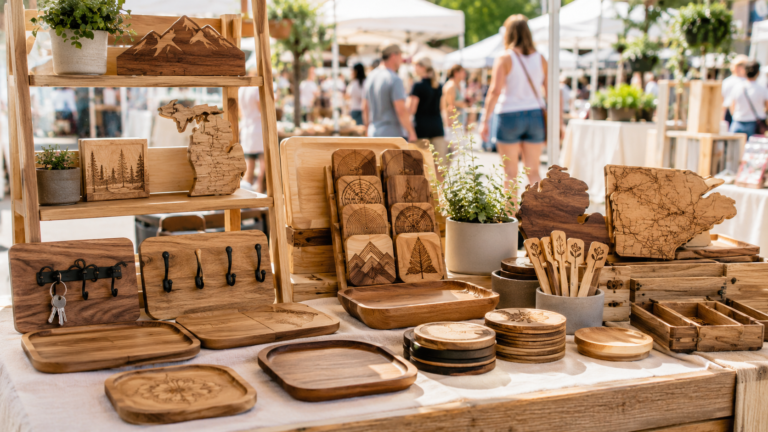
Best CNC Products to Sell at Summer Markets
The best CNC market products aren’t always the most impressive ones. They’re the pieces shoppers understand quickly, you can make repeatedly, and your booth can display without turning setup, finishing, and pricing into a headache.
Not every CNC project that looks great on Instagram is a good summer market product.
That’s the real filter.
Market products have to work in person. A shopper walks by, gives you a few seconds of attention, touches the item, checks the price, and decides whether it fits their home, their gift list, or their budget.
If the piece is too big, too fragile, too custom, too hard to explain, or too expensive for what feels like an impulse purchase, it usually slows the booth down even if it looks impressive on a workbench.
That’s why strong CNC market products tend to share the same traits. They’re repeatable, transportable, easy to finish in batches, and understandable to shoppers almost immediately.
If you’re still deciding what kind of CNC setup makes sense for your shop, start with Beginner’s Guide to CNC Machines. If you’re looking at compact desktop options for small-shop production, Makera Z1 for Small Business helps frame where a smaller CNC fits and where it doesn’t.
And if you’re building market season into a longer production plan, Maker Project Calendar and When to Start Preparing for Fall Craft Fairs are useful next reads.
What Makes a CNC Product Good for a Summer Market?
The best summer-market CNC products usually win on operations before they win on artistry.
That doesn’t mean they need to be boring. It means they need to make sense for booth selling.
A good market product is usually small enough to carry, durable enough to survive transport, simple enough to explain in one sentence, and priced in a way that still leaves margin after wood, bits, sanding time, finish, packaging, booth fees, and card processing.
A few practical questions help separate “looks cool online” from “actually works at a market.”
Can You Make It Repeatedly Without Babysitting Every Piece?
If every item needs constant supervision, complicated workholding, or a long cleanup process, it’s harder to turn into dependable booth inventory.
CNC does well when you can fixture the stock, run a familiar toolpath, do predictable sanding and finishing, and move to the next batch without reinventing the process.
Does the Shopper Understand It in a Few Seconds?
Products that need a long explanation usually underperform in a busy booth.
A sign, tray, key holder, coaster set, or simple shelf is easy to grasp. An abstract decorative object with a clever build story may still be good work, but it’s a harder market sale.
Is the Total Labor Honest, Especially Finishing?
Many CNC sellers underprice the machine time less than they underprice the handwork after the cut.
Sanding, edge cleanup, finish curing, engraving paint fill, masking, and packaging all count. If you aren’t sure your pricing is catching all of that, run each product through the Product Pricing Calculator before you commit to building inventory.
Can You Transport and Display It Without Drama?
Summer markets punish awkward inventory.
Oversized signs, delicate thin-cut pieces, and oddly shaped decor can eat up table space, chip in transit, or force you into a complicated booth layout.
The more stable and stackable the product line, the easier setup day becomes.
Product Types That Usually Work Well for CNC Booths
There’s no single perfect CNC item, but some categories fit the machine especially well because they balance cost, visual appeal, and repeatable production.
Small Signs
Small signs are one of the safest CNC categories for summer markets because shoppers understand them immediately.
Name signs, family-name plaques, simple porch or entry signs, mini kitchen signs, and short phrase signs can all work if you keep the size controlled.
The sweet spot is usually the sign that feels giftable and easy to display without turning into a wall-shipping problem. Smaller pieces let you use hardwood or quality plywood without pushing cost too high, and they’re easier to finish in batches.
The caution is obvious: once signs get large, they become slower to machine, harder to sand, heavier to transport, and more vulnerable to corners getting dinged during load-in.
Large statement signs can still belong in the booth, but more as attention-getters or higher-ticket examples than as the whole business model.
Catch-All Trays and Valet Trays
CNC does very well with trays because they show the machine’s strengths without looking overly technical.
A catch-all tray for keys, jewelry, glasses, or wallet-and-phone storage is easy for a shopper to picture at home. It also works well for gifting.
From a production standpoint, trays are appealing because the shape is clear, the value is visible, and you can create several sizes from similar stock. They also open up straightforward personalization if you want it, but they don’t require personalization to sell.
The main thing to watch is finishing time. A tray that looks simple can still become a sanding-heavy product if the pocket geometry, corner radii, and edge treatment aren’t designed with cleanup in mind.
Cribbage Boards and Simple Game Boards
Game boards can sell well, especially in markets where shoppers are buying gifts or family-oriented products, but they need discipline.
A clean cribbage board, tic-tac-toe set, or compact travel game is often a better market product than a large, elaborate board with too many loose parts.
CNC is a good fit here because repeatable hole spacing and engraved details matter. The category also gives you room for local themes, gift sets, and hardwood upgrades.
The warning is that game boards can quietly become labor traps. Drilling, sanding, edge cleanup, hardware, pegs, pouches, and packaging all add time.
They work best when the design is standardized and the accessories are simple to source and pack.
Key Holders and Entryway Organizers
Key holders are one of the better examples of a CNC product that solves a familiar problem without needing much explanation.
A wall-mounted key rack with a small shelf or mail ledge can feel more valuable than a flat sign because the utility is obvious.
This category also gives you pricing flexibility. You can have a simpler impulse-buy version and a slightly upgraded version with hooks, a shelf, or a more premium wood species.
Keep the design sturdy. Thin decorative cutouts may look attractive at first, but if the piece feels fragile in the hand, shoppers notice.
Summer-market inventory should survive being picked up repeatedly by strangers.
Small Shelves
Small shelves can work surprisingly well if you keep them practical.
Think of a compact shelf for a plant, a diffuser, a phone, a dog leash station, or a bathroom accent piece rather than full furniture.
CNC helps when you want clean repeatable joinery, shaped brackets, engraved details, or simple mounting layouts. This can be a good category for higher average order value than coasters or signs while still being booth-friendly.
The limit is bulk. Once the shelf becomes too large or awkward to stack, it starts acting more like furniture than market inventory.
Flat-pack or easy-assemble designs can help, but only if assembly doesn’t create confusion for the buyer.
Plant Markers and Garden Products
Summer is exactly when plant and garden products make sense.
CNC-cut plant markers, herb markers, mini garden signs, and simple planter accents fit the season naturally and can create good lower-price booth inventory.
This category also works because shoppers can often buy multiples. Someone who hesitates on a bigger decor piece may still pick up a set of herb markers or a small garden sign.
The catch is durability and finish choice. If the product is meant for outdoor use, your wood, coatings, and product language need to be careful and accurate.
Don’t overpromise lifespan or weather resistance. Outdoor products also need enough thickness and simplicity to avoid snapping in a bag before the customer even gets home.
Cutting Boards and Charcuterie Boards, With Caution
Boards can absolutely sell, but they aren’t automatically easy money.
They photograph beautifully and can look premium in a booth, which is why so many makers drift toward them.
The problem is that food-contact products come with extra responsibility. Wood species, glue lines, finishes, oiling, cleaning instructions, and any engraved detail all need more care than a decorative product line.
Boards also carry a hidden time cost. Prep, milling, sanding, edge treatment, conditioning, and packaging add up fast.
If you sell boards, keep the shapes manageable and the messaging accurate. Avoid casual food-safety claims you can’t support, and don’t let this category take over the booth unless you’re confident your process is dialed in.
Coasters
Coasters are a classic market item for a reason.
They’re easy to understand, giftable, easy to bundle, and simple to carry home. CNC lets you add carved details, map motifs, monograms, house shapes, or local themes without needing every piece to become a custom order.
They also help your pricing ladder. A booth usually benefits from at least one lower-price category that still feels handmade and intentional. Coasters can fill that role.
What matters is differentiation. Plain coasters are easy to make, which also means they’re easy for shoppers to compare.
Better wood choice, a cleaner edge profile, a useful holder, or a stronger local theme can make them feel more finished.
Desk Organizers and Small Office Pieces
Desk organizers, phone stands, pen trays, headphone rests, and simple docking stations fit well because they’re functional and compact.
They also appeal to shoppers who aren’t specifically decorating but still want something useful.
This category tends to perform better when the design is visually clean and not overloaded with features.
A simple organizer that holds a phone, watch, glasses, or pens often sells faster than a complicated all-in-one dock that only fits a narrow device setup.
These products are also easier to keep ready to buy. Personalization can be optional instead of expected.
Local, State, and Map-Style Products
Local products are one of the strongest ways to make CNC inventory feel specific to the market instead of generic.
State outlines, town names, lake shapes, neighborhood coordinates, and map-inspired trays or signs can give shoppers a reason to buy now instead of “maybe later online.”
This category works because CNC handles clean outlines, recessed shapes, and layered geography-inspired designs well. It also fits gift buying, tourist traffic, and hometown pride.
The warning is complexity creep. A simple state-shaped board or town-name sign is usually a better seller than a highly detailed map with tiny fragile islands, ultra-thin bridges, or fussy inlays that take forever to finish.
Market Display Add-Ons
One overlooked CNC category is the thing that helps other sellers sell: display risers, earring stands, sign holders, tabletop racks, QR-code blocks, and branded booth fixtures.
These products can be smart for two reasons. First, they’re natural examples in your own booth. Second, they can appeal to other vendors shopping the market before or after setup.
They’re also a good category for showing what CNC does differently from laser-cut display parts. CNC pieces can feel thicker, more substantial, and more furniture-like when designed well.
How to Think About Price Points at a Live Market
A summer market isn’t the same environment as an online storefront.
People are often shopping with a loose budget, carrying drinks, talking to friends, or buying from multiple vendors.
That means your product mix usually needs more than one price level. It helps to have a few genuine impulse-buy items, a mid-range core category, and a smaller number of premium pieces that raise the perceived value of the booth.
The exact numbers depend on your area and your costs, but the broader rule is simple: if every product requires a long price justification, the line may be too heavy for an in-person market.
Utility, giftability, and easy visual appeal matter a lot.
That’s another reason ready-to-buy inventory often outsells highly customized work at a market. The less friction between interest and purchase, the better.
Where CNC Sellers Lose Money at Summer Markets
The most common CNC market mistakes aren’t usually design mistakes. They’re operations mistakes.
Too Much On-the-Spot Customization
Personalization sounds attractive because it feels high value, but live markets can turn it into a bottleneck.
If every customer wants a custom name, date, quote, or design tweak, you can spend the whole event explaining lead times instead of selling finished pieces.
A better approach is usually limited personalization. Offer a few products that can be customized later, but keep the booth centered on ready-to-buy inventory.
Underpricing Sanding and Finishing
This is probably the biggest profit leak in CNC product lines.
A piece that machines cleanly can still take much longer than expected to sand, soften, paint fill, seal, dry, inspect, and package.
If you price from wood and machine time only, you’ll feel busy without being paid well.
Building Oversized Signs Because They Look Impressive
Big signs can attract attention, but they aren’t always what moves fastest.
They take more table or wall space, create transport risk, and often require a more specific buyer. Smaller products usually give you more sales opportunities per market day.
Choosing Delicate Designs That Don’t Survive Handling
If thin details break when packed, chip when displayed, or make customers nervous to touch the product, the design is fighting the sales environment.
Markets reward sturdier products than social media sometimes does.
Selling Products That Need Too Much Explanation
If a customer can’t tell what the item is for, where it goes, or why it costs what it costs within a few seconds, you’re asking too much of a crowded booth interaction.
Ready-to-Buy vs. Made-to-Order
Most summer-market CNC booths perform better when ready-to-buy inventory does the heavy lifting and made-to-order work acts as a secondary option.
Ready-to-buy pieces create momentum. People can pick them up, compare sizes, imagine them at home, and make a quick decision.
Made-to-order work is still valuable, especially for names, family signs, or localized products, but it shouldn’t be the only thing happening at the table.
If you do offer custom work, keep the boundaries simple. Have fixed sizes, limited font or layout choices, clear lead times, and clear pickup or shipping rules.
Too much custom freedom at a live market can quietly turn a profitable day into a quoting exercise.
Supplies and Process Choices Matter More Than People Think
A lot of CNC market success comes from boring shop decisions done well.
Reliable blanks, consistent hardwood boards, quality plywood, sharp bits, dependable clamps, a flat spoilboard, sanding supplies you actually keep stocked, and finishes you trust all make repeatable products easier to maintain.
The real point is operational: your margin is easier to protect when your prep and finishing process are stable.
Cheap stock that tears out, warps, or needs rescue work isn’t really cheap. The same goes for dull bits and neglected workholding.
Final Takeaway
The CNC products that actually sell at summer markets are usually not the ones with the most dramatic toolpaths.
They’re the ones that make sense in real life: small enough to carry, strong enough to survive transport, clear enough to understand fast, attractive enough to feel giftable, and profitable enough after sanding and finishing to justify the work.
If you’re planning inventory now, focus on products that are repeatable first and flashy second.
Small signs, trays, coasters, key holders, compact shelves, local-themed pieces, and simple game boards often have a better market fit than oversized showpieces or heavily customized one-offs.
And if fall is your bigger selling season, use summer markets as a test bed.
Watch what people touch, what they understand immediately, what price points move, and which products create custom-order conversations worth keeping.
Then carry that data into your next production cycle with When to Start Preparing for Fall Craft Fairs.
[…] more examples of practical wood products people understand quickly, the same logic applies from CNC products that actually sell at summer markets. A product that’s easy to understand at a table is usually easier to understand online […]
[…] Laticy’s Beginner’s Guide to CNC Machines is the right starting point. For product ideas, CNC Products That Actually Sell at Summer Markets is a useful companion. This article is the business follow-up: not how to cut, but how small […]
[…] CNC fits and where it doesn’t. And if your goal is product selection for booth season, CNC Products That Actually Sell at Summer Markets pairs well with this article because it focuses on what tends to sell rather than how to machine […]
[…] the filter here. If you want broader CNC market-product ideas, start with CNC Products That Actually Sell at Summer Markets. If your current issue is setup mistakes, workholding, dust, or broken bits, read Small CNC […]