
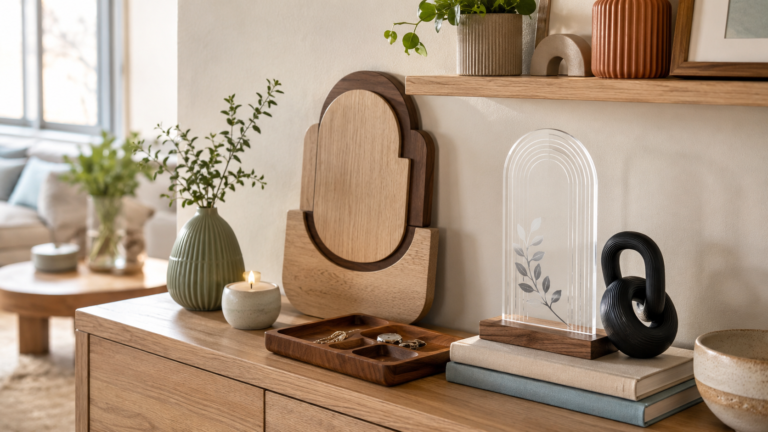
Every year, trend coverage gives you the mood but not the SKU.
You’ll see words like warm, collected, personal, nostalgic, playful, handmade-feeling, tactile, and character-rich. That can be useful. But if you run a small shop, the real question is simpler: what can you actually make, photograph, price, package, and bring to market before the trend cools off?
The broad signal going into 2026 is fairly consistent. Pinterest trend reporting, ecommerce trend coverage, and home decor product guides keep circling back to spaces that feel less flat and less mass-produced. People want decor with texture, personality, and some sense that a human chose it. Not necessarily expensive. Not necessarily luxury. Just less blank.
For makers, that matters because it favors product lines that feel personal, giftable, layered, and easy to mix into real homes.
It doesn’t mean you need to chase every micro-trend on the internet.
It means you should translate those signals into formats your machines already handle well.
What the 2026 home decor trend signal actually means for makers
Most of the useful trend signal comes down to a few buyer preferences:
- decor that feels personal instead of generic
- pieces with tactile contrast, such as wood grain, frosted acrylic, layered surfaces, or matte finishes
- character-rich accents that soften a room without turning it into a themed set
- small, affordable upgrades instead of full-room makeovers
- giftable decor that still feels like home decor, not just a seasonal novelty
That points small shops toward products that are easy to style, easy to ship, and easy for customers to imagine in their own homes.
In practical terms, that means shelf pieces, wall accents, trays, catchalls, tabletop decor, small personalized items, and decorative utility products.
If you already sell event items or seasonal signs, this is a useful pivot. Home decor buyers usually need more context in the listing photos, cleaner styling, and tighter finish choices. If your product photos still look like quick craft-fair snapshots, fix that before chasing another trend. A stronger product photography setup for laser, CNC, UV, and 3D printed products will do more for conversion than copying another trend board.
Start with product families, not one-off trend pieces
A common mistake is seeing one popular decor look and making one exact item for it.
That can work once. It doesn’t build much of a product line.
A better move is to build product families that can flex with color, wording, texture, and personalization. That lets you create a trend-aware line without forcing your shop into constant redesign.
For 2026, the strongest product families are the ones that fit into four practical process lanes:
- laser-made decor accents
- CNC wood decor and utility pieces
- UV printed acrylic and flat goods
- 3D printed small decor accents and add-ons
The machine matters, but so does the role the item plays in a room. A product that helps style a shelf, entry table, coffee bar, nursery, guest room, desk, or market display is easier to sell than a product that needs a long explanation.
That’s the filter. Not “is this trending?” but “does this become a product someone immediately knows how to use?”
Laser products that fit the trend without feeling overdone
Laser shops are in a good position here because the trend signal leans toward layered, personal, and tactile. You can get there without reinventing your workflow.
The risk is that laser home decor can start looking repetitive fast. Another oversized quote sign isn’t a strategy. The better opportunity is smaller, cleaner, more room-aware decor.
Layered name signs and room markers
Personalized decor is still one of the clearest bridges between trend interest and purchase intent. That’s especially true for nurseries, kids’ spaces, entryways, pet spaces, home offices, and gifting.
Instead of only offering the classic script first-name sign, think in broader room-language terms:
- family name plaques with quieter typography
- small room markers for mudrooms, laundry rooms, pantries, playrooms, and guest rooms
- layered shelf signs with a matte painted backer and natural wood face
- understated baby name rounds that still work as decor after the announcement photo
- pet-space signs that feel like home decor instead of novelty gag gifts
The shift is from “custom because it can be” to “custom because it fits the room.” Buyers are getting pickier about fonts, scale, finish, and whether the item works with the rest of their space.
Cleaner layouts usually age better than trend-heavy fonts.
Shelf accents and small wall pieces
A lot of decor shopping happens at the shelf level. People want objects that make a corner feel finished without needing to redecorate the whole room.
Laser-friendly options include:
- small arched backer signs with simple phrases
- seasonal-but-not-too-seasonal shelf sitters
- layered botanical or abstract line-art panels
- wood and acrylic mini frames
- ornament-sized decorative hangers that can work year-round
- basket tags that look decorative instead of purely functional
These work best when they feel collected rather than loud. Neutral, earth-toned, black, walnut, oak, sage, clay, cream, and soft blue finishes usually have more staying power than chasing one viral color too aggressively.
Ornament logic, but for everyday decor
A useful thought experiment: what if you applied ornament product discipline to non-holiday decor?
Ornaments sell because they’re affordable, easy to personalize, easy to gift, easy to display, and easy to understand quickly. Everyday home accents can borrow that formula.
That could mean:
- mini hanging decor for hooks, pegs, knobs, or small wall areas
- acrylic-and-wood tags for baskets, shelves, and organization
- small symbolic shapes for shelves, such as bows, florals, arches, moons, stars, or abstract forms
- interchangeable seasonal inserts for a permanent base piece
- small keepsake pieces that can move from a nursery to a memory box later
If you already do strong Q4 volume, this category can also help bridge into holiday planning. The shops that do this well usually think ahead about carryover inventory, which is where Q4 inventory planning for makers and early seasonal planning like Christmas in July for makers become useful.
CNC products that turn “warm and handmade-feeling” into real SKUs
CNC is a strong match for home decor trends because wood still reads as grounding, tactile, and worth displaying.
The challenge is avoiding pieces that feel too rustic, too bulky, or too generic.
A CNC product can look expensive when the shape, edge profile, finish, and use case are clear. It can also look like a shop project if the finishing is rushed or the design depends too much on text.
Trays, catchalls, and decorative utility
Decor buyers like products that do a job while still looking intentional on a table, dresser, desk, or counter.
Good CNC candidates include:
- valet trays with softened corners
- ring dishes and small catchalls
- entryway trays for keys and sunglasses
- coffee table trays with subtle carved details
- pedestal risers for kitchen counters or bathroom styling
- candle trays or small display bases
These are useful because they photograph well, gift well, and give customers an excuse to buy decor without calling it decor.
You can go minimal, coastal, organic modern, farmhouse-adjacent, vintage-inspired, or slightly playful by changing edge profile, stain, paint wash, hardware, and typography. The base product can stay mostly the same.
That matters for production. A flexible base product is easier to test than a complicated one-off.
Wall pieces with shape, not just wording
Text-heavy wall signs have been fading for a while. Buyers still want wall decor, but they often respond better to shape, depth, texture, and material.
That opens up CNC-friendly products like:
- carved geometric panels
- scalloped or arched wall plaques
- framed relief-style botanical pieces
- small gallery-wall fillers
- wood backers paired with acrylic names or simple overlays
- house-number or entryway pieces that feel more designed than hardware-store basic
A good rule: if the piece only works because of the quote on it, it may be tied to an older sign trend. If it still works without the text, you’re closer to where decor is headed.
Serving and hosting pieces that cross into decor
One reason trays and boards keep selling is that they live at the intersection of kitchen, gifting, and decor. They can sit out.
That makes CNC products with display potential especially attractive:
- charcuterie-style boards that lean against a backsplash
- carved bread boards with decorative silhouettes
- mini risers for soap dispensers or candles
- small hosting sets sold with styling intent, not just function
- engraved recipe boards or family-name boards when the design stays clean
If you want more examples of practical wood products people understand quickly, the same logic applies from CNC products that actually sell at summer markets. A product that’s easy to understand at a table is usually easier to understand online too.
UV printed products that feel polished, giftable, and current
UV printing tends to shine when you lean into finish, color clarity, and flat or layered formats that would be annoying to hand-produce at scale.
For 2026 decor trends, UV is less about novelty graphics and more about crisp personalization, decorative transparency, and small polished objects.
The risk is making everything look like a demo sample. Just because UV can print a full-color graphic on a surface doesn’t mean that surface becomes a good decor product.
Acrylic decor with a cleaner look
Acrylic can go cheap fast if the design is loud or the colors are harsh. But when it’s restrained, it fits the current decor mood surprisingly well.
Promising categories include:
- frosted or clear acrylic shelf signs
- acrylic photo blocks with soft, neutral layouts
- decorative menu boards or welcome plaques for hosting
- family recipe displays
- layered acrylic-and-wood decor for desks, bookshelves, and kitchen counters
- memorial or keepsake pieces that are understated rather than overly decorated
This is a nice lane for giftable home decor because the product can feel elevated without needing a huge material cost.
Decorative organization and label-adjacent pieces
Organization products do well when they stop looking purely utilitarian. UV makes that easier.
Examples include:
- pantry and basket labels with decorative shape language
- acrylic tags for toy bins, guest room baskets, and coffee bars
- personalized stand-up desk or vanity accessories
- decorative calendars or routine boards for family spaces
- small display labels for market tables, home bars, coffee stations, or craft rooms
These work because they fit the “small home upgrade” mindset. A buyer may not redo a room, but they’ll spend on a few details that make a space feel finished.
Flat decor giftables for easier shipping
One quiet advantage of UV product lines is shipping simplicity. If the item is thin, durable enough for normal handling, and easy to protect, you can test more styles without tying up too much money in packaging mistakes.
Good supply tie-ins here include:
- acrylic blanks
- display stands
- hanging hardware
- anti-scratch sleeves
- branded insert cards
- photo styling props
Pricing also needs a real gut check here, especially once you add multiple finish tiers. Don’t just guess. The product pricing calculator is useful here because home decor pricing gets slippery once you add finish time, packaging, styling, and spoilage.
3D printed decor accents that make sense for small shops
3D printed home decor can be a harder sell when it looks too gadgety, too glossy, or too obviously printed. But the current trend direction helps if you stay in the right categories.
The sweet spot is small accent pieces that benefit from shape, customization, or modularity more than they depend on luxury material perception.
Decorative shelf objects and bud vase forms
This category works when the silhouette does the selling.
Ideas worth testing include:
- abstract shelf sculptures
- ribbed or fluted bud vase sleeves and inserts
- small book stack accents
- modular decorative links and chain objects
- personalized tabletop shapes for nurseries or offices
- small plant stands or risers for lightweight use cases
Matte materials and softer colors matter a lot here. The product should read as intentional decor, not prototype plastic.
Add-on components for mixed-material decor
One of the smartest uses of 3D printing isn’t as the entire product, but as the detail that makes another product more flexible.
That can include:
- stands and feet for acrylic or wood signs
- decorative corner pieces
- modular insert systems
- wall mounting helpers
- interchangeable embellishments for seasonal refreshes
- small adapters that help one base product work on a shelf, wall, peg, or table
This is especially useful if you run more than one process in your shop. A laser-made decor line gets more interesting when 3D printed stands or adapters expand how customers can use it.
Personalized decor for niche rooms and routines
The larger home decor market often starts with broad aesthetics, but small makers win by getting specific.
3D printing is well suited for:
- gaming room decor accents
- desk accessories that also style a workspace
- kids’ reward or routine boards with decorative pieces
- custom shelf name pieces
- pet-space decor with practical hooks or holders
- craft-room and studio organization that looks better than plain bins
The trick is keeping the design language home-forward, not novelty-forward.
A 3D printed object shouldn’t feel like the customer is buying your printer’s capabilities. It should feel like they’re buying a useful little piece for their room.
How to choose which trend-informed products to test first
This is the part trend articles usually skip.
Don’t start with what looks coolest on Pinterest. Start with what your shop can repeat cleanly, style well, and package without drama.
A good first test product usually has these traits:
- it fits one of your existing materials and workflows
- it can be photographed in three or four believable room contexts
- it solves a decorating need people already understand
- it has room for light personalization without becoming a custom-design time sink
- it ships without odd dimensions, fragile edges, or expensive protection
- it can be made in a small batch without creating a pile of awkward inventory
That often means your first winners aren’t giant statement pieces. They’re smaller products that people can add to a shelf, tray, nursery wall, office, entry table, or gift basket without rethinking the whole room.
If you’re selling in person, this same filter matters at markets. A product should be understandable from a few feet away. If someone has to ask what it’s before they care, the design may need to be simpler.
Finish, styling, and packaging matter more in decor than in many other niches
A decor item can be well made and still underperform if the finish looks rough, the styling feels off, or the packaging suggests “craft project” instead of “finished product.”
That doesn’t mean you need luxury everything.
It means you need consistency.
For decor lines, buyers notice:
- whether your whites match
- whether your wood tones fight each other
- whether your acrylic looks clean in photos
- whether the size is obvious
- whether the product feels gift-ready when it arrives
- whether the finish looks intentional or rushed
- whether the product belongs in the room shown in the photo
This is why decor products often need stronger visual presentation than event signage or impulse market items. The buyer isn’t just asking, “Do I like this?” They’re asking, “Will this look right in my home?”
If you’re heading into late summer and fall, the timing matters too. Decor buyers overlap heavily with gifting buyers and craft fair shoppers, so planning for fall craft fairs can support your online product decisions as well.
A simple way to build a 2026 decor collection without overcommitting
If you want to test this category without building an entire new catalog, keep it small.
Pick one trend direction that fits your brand. Then build:
- one wall or hanging item
- one shelf or tabletop item
- one useful decor item, such as a tray, catchall, tag set, or label set
- one personalized variation
That’s enough to tell you whether customers respond to the look, the finish, the price, and the photo styling.
If it moves, extend it by material, color, room use, or personalization level. If it doesn’t, you still learned something without creating a pile of weird inventory.
For example, a small neutral nursery collection could include a layered name sign, a small shelf accent, a keepsake tag, and a matching acrylic or wood room marker. A kitchen collection could include a small riser, a recipe display, basket labels, and a simple wall piece. A desk collection could include a nameplate, cable or tray accessory, small shelf object, and matching photo block.
The point isn’t to make more products for the sake of more products.
The point is to make related products that help customers understand the look.
The opportunity isn’t “home decor trends.” It’s translation.
Trend reports are good at describing taste. Makers still have to translate taste into something buildable.
For 2026, that translation looks favorable to small shops. Buyers are leaning toward home pieces that feel personal, tactile, and a little less perfect. That gives laser, CNC, UV, and 3D makers a real opening, especially if the products are small enough to test, good enough to gift, and styled well enough to imagine at home.
You don’t need to become a trend forecaster.
You need to notice the direction of the room, then make products that belong in it.
FAQ
What home decor products are easiest for makers to test first?
The easiest first tests are usually shelf signs, catchall trays, small wall accents, acrylic decor pieces, room markers, decorative labels, and simple personalized tabletop items. They’re easier to style, easier to ship, and easier for customers to understand than large statement decor.
Which machine type is best for home decor products?
There’s no single best option. Laser shops do well with layered signs, shelf accents, and personalized decor. CNC fits trays, wall panels, risers, and decorative utility pieces. UV works for polished acrylic giftables and organization pieces. 3D printing is strongest for small accents, modular parts, display stands, and shape-driven decor.
Are personalized decor products still worth selling in 2026?
Yes, but the style matters more now. Personalized products still sell when they feel like real decor, not just a name added to a generic item. Cleaner typography, better color choices, and more room-specific use cases tend to perform better than overly busy designs.
How do I avoid chasing trends that won’t sell?
Start with product formats your shop already produces well. Then adapt finish, color, shape, or personalization to fit the trend signal. If a product is hard to photograph, hard to explain, hard to price, or hard to ship, it’s probably a weak first test no matter how trendy it looks online.
What should makers focus on besides the product itself?
For home decor, finish quality, listing photos, dimensions, styling, packaging, and gift-readiness matter a lot. A decent product can underperform if it looks awkward in photos or arrives without a finished-product feel.
[…] connects naturally to Laticy’s recent article on turning 2026 home decor trends into products makers can actually build. Trend fit still matters. A new production method doesn’t save a product that no one wants on […]